Recent articles by Annia Ciezadlo
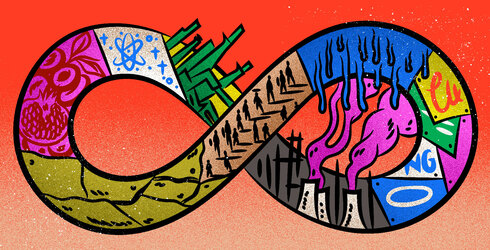

Because of the Droughts
October 16, 2022
Adi Magazine
October 16, 2022
Adi Magazine
The idea that climate change triggered the Syrian uprising is a persistent and dangerous myth. What really happened?
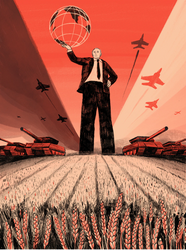
The world has plenty of wheat. Putin still uses it as a weapon.
May 6, 2022
The Washington Post
May 6, 2022
The Washington Post
How Putin is using wheat as a weapon of psychological warfare.
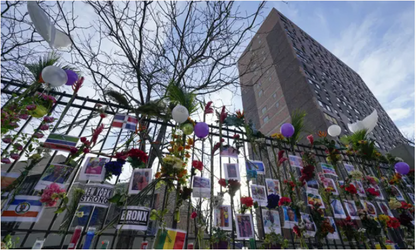
Why do the super-rich treat affordable housing in the Bronx as a lucrative asset class?
January 14, 2022
The Guardian
January 14, 2022
The Guardian
Follow the money, and you will find a line from the broken doors and space heaters in buildings all over the city to the big banks that finance affordable housing deals.

The Facebook Papers Must Be Shared With Outlets Globally
November 3, 2021
WIRED
November 3, 2021
WIRED
The news consortium exposing the company's worldwide abuses hasn’t included the journalists best equipped to report on them—those in the global south.

"About Food: The Food System in Turbulent Times” [in Dutch]
October 29, 2020
Flevo Campus, the Netherlands
October 29, 2020
Flevo Campus, the Netherlands
If cities can starve in Syria—a country with abundant food and water, in the heart of the Fertile Crescent—they can starve anywhere.
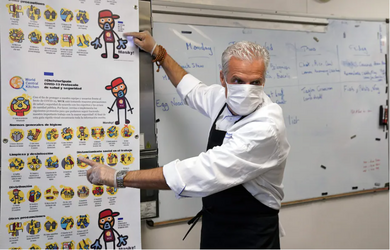
The safety problem for restaurants isn’t the dining room. It’s the kitchen.
May 29, 2020
The Washington Post
May 29, 2020
The Washington Post
As customers head back out to eat, most of the public discussion about safety is focusing on the front of the house — where customers sit. But in the back of the house, the part that most customers never see, a very different conversation is taking place.

Why is New York’s most famous library getting into bed with the Saudi Crown Prince?
September 19, 2019
The Guardian
September 19, 2019
The Guardian
Using the library’s main branch to promote a despot’s private event betrays the NYPL’s founding mission of serving the public.
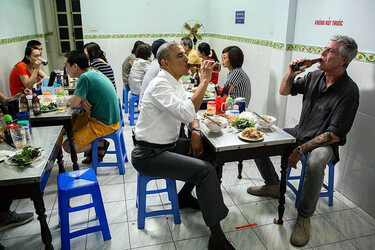
Anthony Bourdain: The TV Star Who Used Food to Break Down Barriers 1956–2018
December 30, 2018
Politico
December 30, 2018
Politico
"What made Bourdain great was that he kept reminding us it wasn’t just about him: He used his platform on TV and in print to speak up for people he felt had gotten a raw deal—people who, in a more just world, would have the opportunity to speak up for themselves."
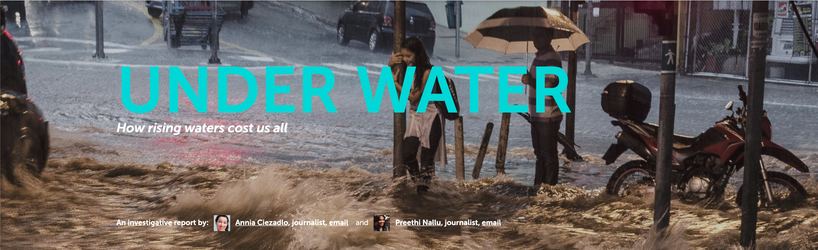
“Under Water: How Rising Waters Cost Us All,”
October 8, 2018
Orb Media Network: Dhaka Tribune, Bangladesh; Folha de Sao Paolo, Brazil; Politiken, Denmark; Die Zeit, Germany; South China Morning Post, Hong Kong; The Hindu, India; Channels TV, Nigeria; Louisville Public Media, USA
October 8, 2018
Orb Media Network: Dhaka Tribune, Bangladesh; Folha de Sao Paolo, Brazil; Politiken, Denmark; Die Zeit, Germany; South China Morning Post, Hong Kong; The Hindu, India; Channels TV, Nigeria; Louisville Public Media, USA
We frame climate change in terms of the future: cities underwater by the year 2040, 2050, 2100. But for a growing number of people across the globe, that watery future is already here.
As higher temperatures lead to sea level rise and more extreme rainfall, more and more people are already learning to live with catastrophic flooding. Many find creative ways to adapt. But it comes at a cost—first and foremost to them, but in the end to all of us.
As higher temperatures lead to sea level rise and more extreme rainfall, more and more people are already learning to live with catastrophic flooding. Many find creative ways to adapt. But it comes at a cost—first and foremost to them, but in the end to all of us.
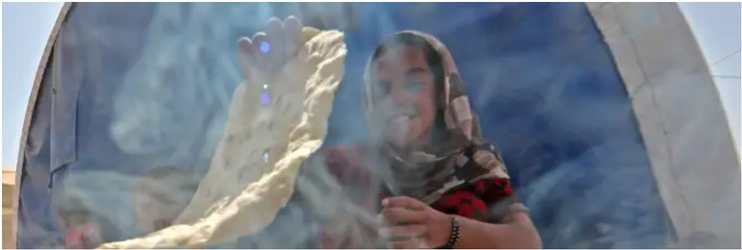
Breaking Bread: Food in Times of War
December 14, 2017
KCET-TV
December 14, 2017
KCET-TV
“I am currently a medic in the Army and have spent a considerable amount of time in Iraq,” he wrote.... He added that he was crying as he wrote the email, and added, in closing, “I was always taught that Soldiers aren't supposed to cry.”

Why would Assad use sarin in a war he's winning? To terrify Syrians
April 11, 2017
The Washington Post
April 11, 2017
The Washington Post
From the conspiracy-site far right to the anti-imperialist left, the question of why Assad would attack his own people when he was already winning the war managed to sow confusion and doubt. But history tells us that Assad had plenty to gain from using chemical weapons.

Analysis: The World According to Trump, and What It May Mean For Syria
December 19, 2016
Syria Deeply
December 19, 2016
Syria Deeply
As Trump ushers in an era of deals between states, the real conflicts will be between increasingly authoritarian states and their increasingly dissatisfied subjects.
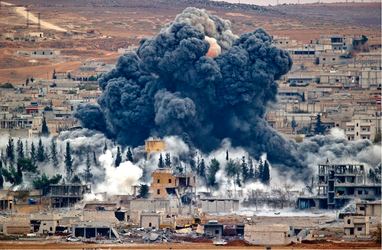
The US Has Intervened In Syria, But Not the Way You Think
October 31, 2016
Syria Deeply Long Read
October 31, 2016
Syria Deeply Long Read
The debate over a theoretical American intervention against Assad is obscuring this central fact: the United States already has intervened militarily in the Syrian conflict. As of October 25, the U.S.-led coalition against ISIS had carried out 5,616 airstrikes in Syria, the vast majority of them by U.S. warplanes.
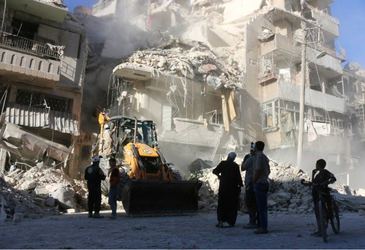
Why Assad’s Propaganda Isn’t As Crazy As It Seems
October 3, 2016
Syria Deeply
October 3, 2016
Syria Deeply
In the realm of ideas and images, the Syrian government’s propaganda is just as effective as its bombing campaigns.
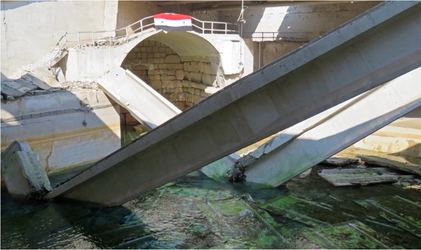
After Battle For Wadi Barada, the Damascus Water War Isn’t Over
February 14, 2017
Syria Deeply
February 14, 2017
Syria Deeply
The long history of water as a weapon in the Syrian conflict.
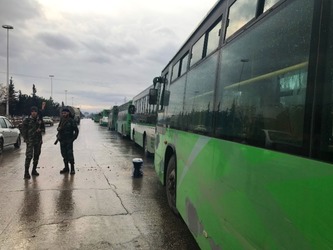
The Fall of Rebel-Held Aleppo is a Warning to Others Who Oppose Assad
December 14, 2016
Syria Deeply
December 14, 2016
Syria Deeply
What happened in Aleppo was many things, but most of all, it was a warning – to anyone who may think of resisting the power of the state.
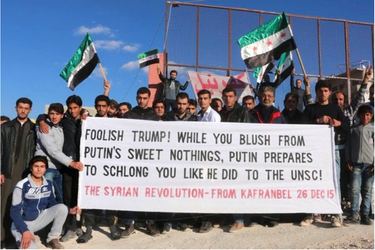
Trump is the US President Assad Has Been Waiting For
November 23, 2016
Syria Deeply
November 23, 2016
Syria Deeply
U.S. president-elect Donald Trump has made it clear that he considers the fight against the so-called Islamic State more important than anything else in the Middle East – including Syrian civilian lives, which are likely to be a low priority for his administration.
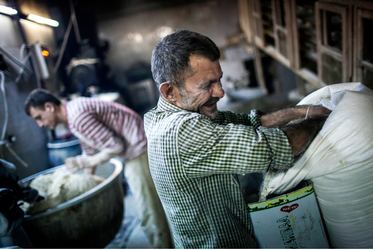
Green Gold: How ISIS Is Making As Much Money From Wheat As From Oil
October 20, 2016
Syria Deeply
October 20, 2016
Syria Deeply
Like the Syrian government, ISIS is a net cereal exporter – and may get almost as much revenue from the spikes of grain above the ground as the black gold underneath.
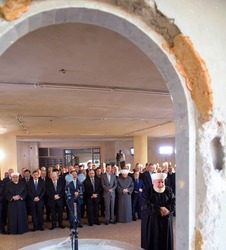
Game of Shrines and the Road to Darayya
September 15, 2016
Syria Deeply
September 15, 2016
Syria Deeply
How an Iraqi cleric's prayer in a Syrian city is fueling an ongoing process of sectarianization that will be difficult to reverse.

No End to Aleppo’s Brutal Stalemate
August 22, 2016
Syria Deeply
August 22, 2016
Syria Deeply
Aleppines expect very little from high-level talks between the American and Russian governments. And if history is any guide, they are right.
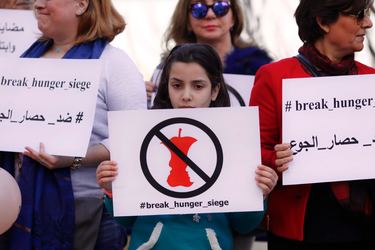
The Siege Sector: Why Starving Civilians is Big Business
August 11, 2016
Syria Deeply
August 11, 2016
Syria Deeply
Besieged civilians are a captive and extremely lucrative market.
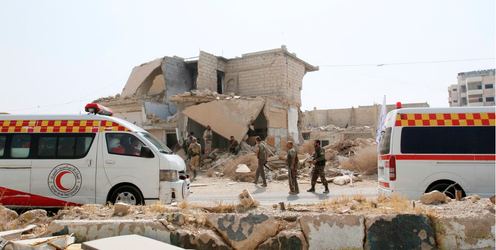
How Evacuating al-Waer and ‘Other Darayyas’ Will Help Assad
September 5, 2016
Syria Deeply
September 5, 2016
Syria Deeply
The tactic of withholding food and medical supplies, when used against civilians, is a war crime under international law. But the sieges have ground on, leaving the government free to besiege these areas for years – and now, one by one, to force them into surrender.
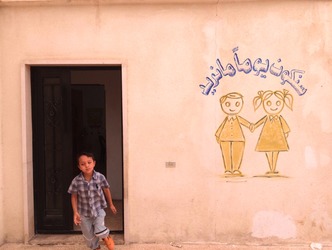
For Syrian Kids in Lebanon, School is ‘Like a Miracle'
July 26, 2016
Syria Deeply
July 26, 2016
Syria Deeply
When parents’ lives are precarious, children end up not attending school.
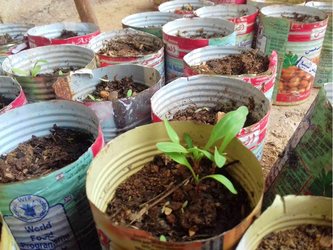
Sowing Hope and Weeding out Siege Profiteers
July 18, 2016
Syria Deeply
July 18, 2016
Syria Deeply
People in Syria's besieged areas have discovered a secret weapon that’s difficult to detect and almost impossible to defeat: seeds.
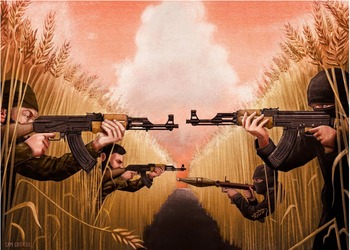
The most unconventional weapon in Syria: Wheat
December 18, 2015
The Washington Post
December 18, 2015
The Washington Post
In the Syrian conflict, all the players are using wheat and bread as a weapon—and civilians are paying the price.
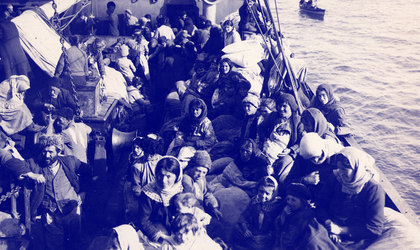

Paris is a city. Beirut is a ‘war zone.’ Why the way we talk about those places matters.
November 17, 2015
The Washington Post
November 17, 2015
The Washington Post
ISIS bombed a neighborhood, not a "Hezbollah stronghold."

Greeks Bearing Gifts
November 30, 2015
Politico magazine
November 30, 2015
Politico magazine
How Greeks are helping refugees despite their destroyed economy.
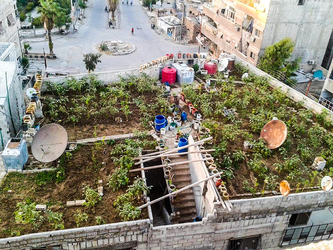
A garden grows amid the daily dangers of a siege in Syria
May 18, 2015
Al Jazeera America
May 18, 2015
Al Jazeera America
Yarmouk’s forgotten civilians have been fighting the medieval weapon of hunger with creativity, humor and the ultimate grass-roots resistance strategy: gardens.
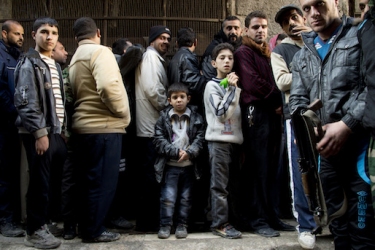
The War on Bread: How the Syrian regime is using food as a weapon
February 14, 2014
The New Republic online
February 14, 2014
The New Republic online
The mass media frames food as something that brings the Middle East together during conflict, not something that tears it apart. Which is why, when leaders use food as a weapon, we often fail to recognize this hideous war crime until it’s too late.

Bashar al-Assad: an Intimate Profile of a Mass Murderer
December 2013
The New Republic
December 2013
The New Republic
In 1982, not long after his father's military pulverized a town called Hama, Bashar Al Assad got a jet ski...
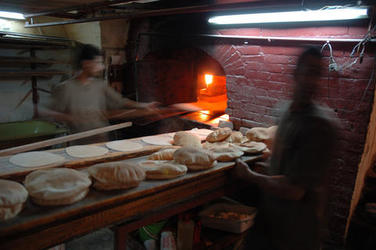

Let Them Eat Bread: How Food Subsidies Prevent (and Provoke) Revolutions in the Middle East
March 23, 2011
Foreignaffairs.com
March 23, 2011
Foreignaffairs.com
How the bread that used to ensure obedience turned into a symbol and a source of revolution.

Eating in Public: Pleasure or Peril?
February 28, 2012
nytimes.com
February 28, 2012
nytimes.com
Echoes of Victorian finger-wagging from lawmakers who pit public eating against cleanliness, godliness and that elusive quality we refer to as being “civilized.”

Eat, Drink, Protest
May/June 2011
Foreign Policy
May/June 2011
Foreign Policy
In the wrong hands, food can be a weapon: a short, sweet history of food propaganda.

Does the Mediterranean Diet Even Exist?
April 3, 2011
The New York Times Magazine
April 3, 2011
The New York Times Magazine
The more we try to eat like Mediterraneans, the more they're trying to eat like us.

History on a Plate
July 21, 2011
Time
July 21, 2011
Time
A short history of harisa/haleem, the mixture of meat, spices, and grains that people have been eating across continents and centuries.

They Remember Home
December 2008
Saveur
December 2008
Saveur
Marooned in Beirut, Iraqi refugees ease the pain of exile with home cooking. Included in Best Food Writing 2009.

Sect Symbols
15 February 2007
The Nation
15 February 2007
The Nation
The secret history of downtown Beirut and the man who rebuilt it. (Book review.)


Camp Rout
24 May 2007
The New Republic Online
24 May 2007
The New Republic Online
Armed militiamen help out the overstretched Lebanese army.


Baghdad Thanksgiving, 2003
22 November 2007
The New York Times
22 November 2007
The New York Times
Thanksgiving in Baghdad, four years ago.






Sheik Up
28 August 2006
The New Republic
28 August 2006
The New Republic
Nasrallah's war: a profile of Hezbollah leader Hassan Nasrallah during the 2006 war.

Dreams Deferred in Lebanon
2 August 2006
The Nation Online
2 August 2006
The Nation Online
How Lebanon's Slow Food movement fared during the war.

Crying Shame
21 August 2006
The New Republic
21 August 2006
The New Republic
The man who cried: a profile of Lebanese Prime Minister Fouad Siniora.


Comic Relief
February 27, 2006
The New Republic Online
February 27, 2006
The New Republic Online
In Lebanon and Syria, the cartoon jihad is not a battle between West and East. It’s a struggle by mainstream Sunnis to contain a growing network of radical Islamists.


